

Fix & Flip Deal Analyzer for
Real Estate Investors
Before You Flip the House, Flip the Math.
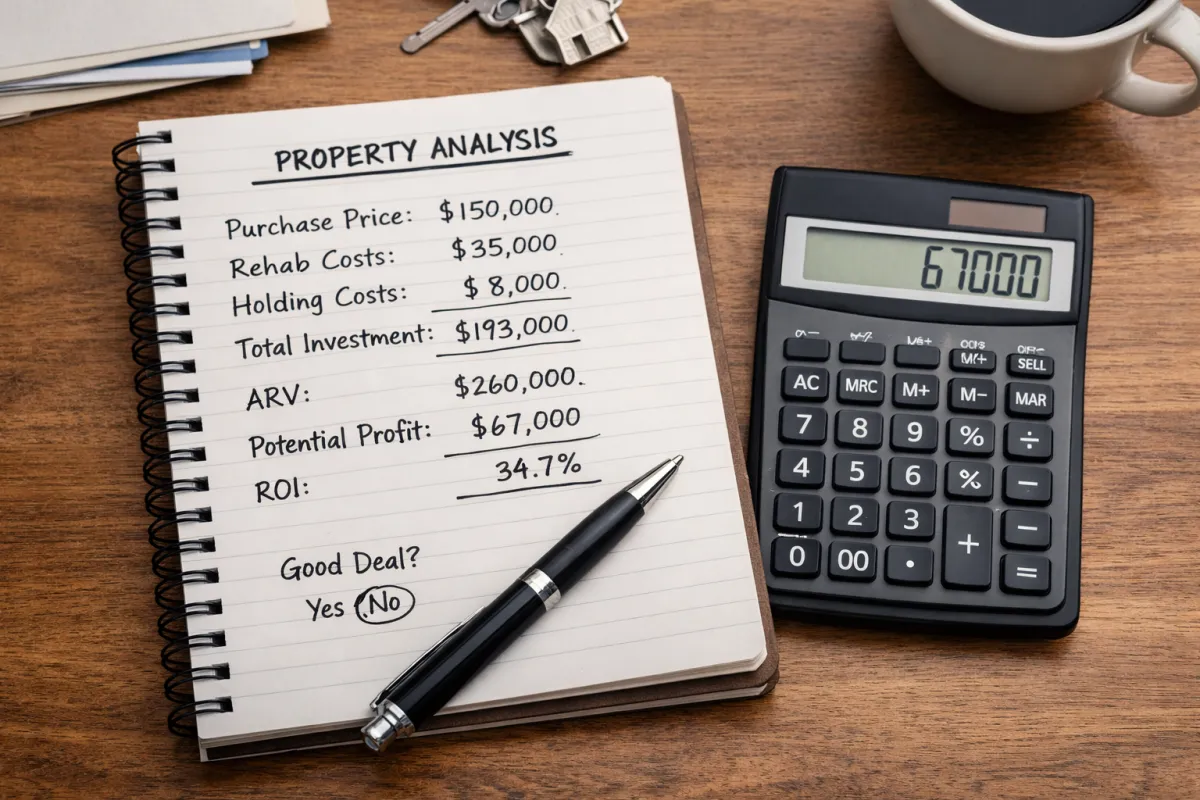
The Fix and Flip Calculator helps real estate investors evaluate potential house flipping deals before purchasing a property.
Investors can estimate renovation costs, financing expenses, holding costs, and resale values to determine whether a property will produce a profitable return.
By analyzing the full investment scenario before buying, investors can identify risks, avoid thin margins, and make more disciplined investment decisions.
What Is a Fix and Flip Calculator?
A fix and flip calculator helps real estate investors estimate the profitability of renovating and reselling a property. It analyzes purchase price, renovation costs, holding expenses, financing costs, and resale value to project potential profit and risk before buying the property.
How do investors estimate renovation costs for a flip?
Investors estimate renovation costs by evaluating the condition of the property, the scope of work required, contractor pricing, and material costs. Many investors also add contingency reserves to account for unexpected repairs.
What is ARV in a fix and flip deal?
ARV stands for After Repair Value. It represents the estimated market value of a property after renovations are completed and the property is ready to be sold.
What profit margin do most fix and flip investors target?
Many investors aim for profit margins between 15% and 30% depending on risk, financing costs, and market conditions. Conservative investors often require larger margins to protect against unexpected delays or cost overruns.
Why do many house flips lose money?
Flips typically lose money due to inaccurate renovation estimates, unrealistic resale projections, unexpected repairs, or timeline delays that increase holding costs.
How can investors compare multiple flip deals?
Investors compare deals by analyzing projected profit, total investment required, timeline risk, and return on investment. A calculator allows them to quickly evaluate multiple opportunities using consistent assumptions.