
Rental Property Calculator for Long-Term Buy-and-Hold Investors
The Utah REIA Rental Property Calculator is a free analysis tool built for real estate investors who plan to hold a property long-term and generate recurring monthly rental income. It models the full deal from acquisition through monthly cash flow so investors can evaluate whether a rental investment makes financial sense before making an offer.
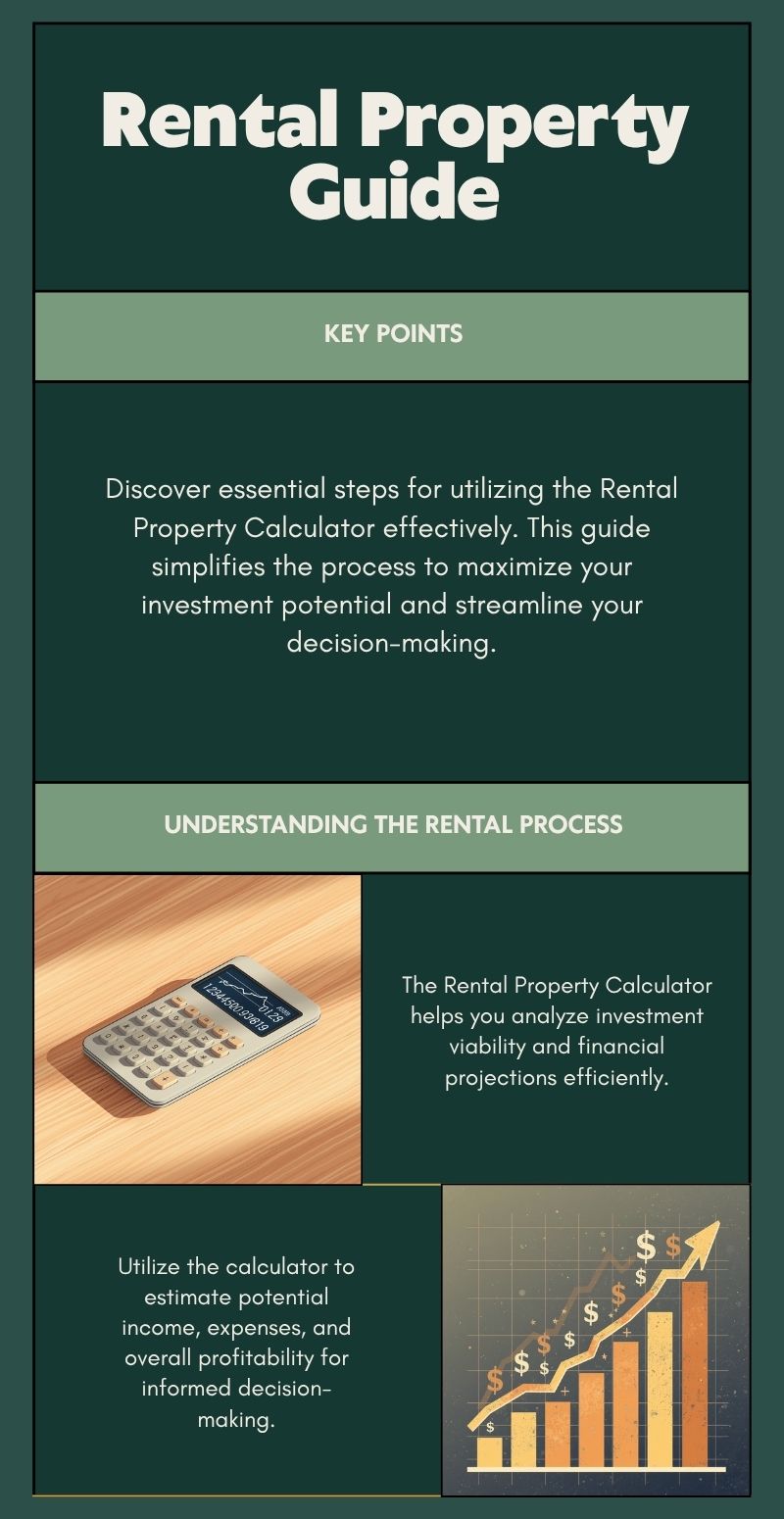
The calculator walks through 12 steps: property details, purchase price and ARV, rehab costs, purchase financing, closing costs, holding costs, rental income, operating expenses, CapEx reserve, permanent loan details, depreciation, and a final analysis report. The report shows total all-in cost, cash to close, net monthly cash flow, Cash-on-Cash return, annual depreciation deduction, and a 30-year equity and cash flow projection.
This tool is designed for standard long-term rental analysis. Investors evaluating a BRRRR deal, short-term rental, or fix-and-flip should use the corresponding Utah REIA calculator for that strategy.
How the Rental Property Calculator Works
The calculator collects inputs across 12 structured steps and produces a single analysis report. Each step builds on the one before it.
• Property Information: Address, bedrooms, bathrooms, square footage, year built, and condition notes
• Purchase Price and ARV: Acquisition price and estimated post-renovation market value
• Rehab Costs: Total renovation budget to bring the property to rentable condition, with optional itemized breakdown by trade
• Purchase Financing: Loan amount, interest rate, term, points, and down payment. Supports multiple simultaneous loans
• Purchase Closing Costs: Title insurance, escrow fees, transfer taxes, inspections, appraisal, and lender fees
• Holding Costs: Monthly carrying costs during the period from purchase to tenant move-in, including taxes, insurance, and utilities
• Rental Income: Gross monthly rent, other income, and vacancy rate
• Operating Expenses: Property management, taxes, insurance, HOA, maintenance, utilities, landscaping, and custom items
• CapEx Reserve: Monthly savings set aside for future capital expenditures such as roof, HVAC, and appliances
• Permanent Loan Details: Final loan balance, interest rate, term, and PMI if applicable
• Depreciation: Depreciable basis, land value allocation, and annual IRS depreciation deduction
• Analysis Report: Complete output including cash flow, Cash-on-Cash return, depreciation, and 30-year projection chart
When to Use This Calculator
This calculator is designed for buy-and-hold rental analysis only. Use it when:
• You are purchasing a property to hold as a long-term rental on 12-month leases
• You want to evaluate cash flow, Cash-on-Cash return, and depreciation before making an offer
• You are comparing multiple rental properties side by side
• You need to present a rental deal to a partner, lender, or private investor with professional numbers
• You want to know exactly how much cash you need at closing
If your strategy is different, use the matching Utah REIA tool:
• BRRRR strategy (buy, rehab, rent, refinance, repeat): use the Utah REIA BRRRR Calculator
• Short-term rental on Airbnb or VRBO: use the Utah REIA Short-Term Rental Calculator
• Fix-and-flip for resale profit: use the Utah REIA Fix and Flip Calculator

How the Rental Property Calculator Works
The calculator collects inputs across 12 structured steps and produces a single analysis report. Each step builds on the one before it.
• Property Information: Address, bedrooms, bathrooms, square footage, year built, and condition notes
• Purchase Price and ARV: Acquisition price and estimated post-renovation market value
• Rehab Costs: Total renovation budget to bring the property to rentable condition, with optional itemized breakdown by trade
• Purchase Financing: Loan amount, interest rate, term, points, and down payment. Supports multiple simultaneous loans
• Purchase Closing Costs: Title insurance, escrow fees, transfer taxes, inspections, appraisal, and lender fees
• Holding Costs: Monthly carrying costs during the period from purchase to tenant move-in, including taxes, insurance, and utilities
• Rental Income: Gross monthly rent, other income, and vacancy rate
• Operating Expenses: Property management, taxes, insurance, HOA, maintenance, utilities, landscaping, and custom items
• CapEx Reserve: Monthly savings set aside for future capital expenditures such as roof, HVAC, and appliances
• Permanent Loan Details: Final loan balance, interest rate, term, and PMI if applicable
• Depreciation: Depreciable basis, land value allocation, and annual IRS depreciation deduction
• Analysis Report: Complete output including cash flow, Cash-on-Cash return, depreciation, and 30-year projection chart
The Utah REIA Rental Property Calculator is a free web-based tool that helps real estate investors analyze buy-and-hold rental deals from acquisition through monthly cash flow. It calculates net monthly cash flow, Cash-on-Cash return, annual depreciation, and a 30-year equity and cash flow projection based on inputs across 12 structured steps.
The Utah REIA ReCash-on-Cash return is the primary performance metric for rental property investing. It is calculated by dividing annual net cash flow by total cash invested at closing and expressing the result as a percentage. Most experienced investors target 8-12% Cash-on-Cash return on a leveraged long-term rental.
What is a rental property calculator?
A rental property calculator is a tool that helps real estate investors analyze a buy-and-hold deal before purchasing. It estimates monthly cash flow, Cash-on-Cash return, operating expenses, depreciation, and the total cash required to close the deal. The Utah REIA Rental Property Calculator covers all of these outputs in a single 12-step analysis workflow.
What is Cash-on-Cash return for a rental property?
Cash-on-Cash return is annual net cash flow divided by total cash invested, expressed as a percentage. It is the standard performance benchmark for rental investing. The formula is net monthly cash flow multiplied by 12, divided by cash to close, multiplied by 100. Most investors target 8-12% Cash-on-Cash return on a leveraged rental. Cash-on-Cash measures cash return only. Total return also includes equity paydown and appreciation.
How do you calculate cash flow on a rental property?
Net monthly cash flow equals effective gross income minus all monthly expenses. Effective gross income is gross rent plus other income minus vacancy allowance. Monthly expenses include property management, taxes, insurance, HOA, maintenance, CapEx reserve, and mortgage principal and interest. The result is the cash deposited each month after all obligations are paid.
What is a good Cash-on-Cash return for a rental property?
Most experienced investors target 8-12% Cash-on-Cash return on a leveraged rental. Coastal and high-cost markets often yield 4-6%. Inland and Midwest markets often yield 10-15%. Cash-on-Cash is a cash return measure only and should be evaluated alongside equity paydown and appreciation for a complete picture of total return.
How does depreciation work on a rental property?
The IRS allows residential rental property owners to deduct the cost of the building over 27.5 years. This is a non-cash deduction that reduces taxable rental income without reducing actual cash flow. The annual deduction equals the depreciable basis divided by 27.5. Land value is not depreciable. A $300,000 property with $50,000 allocated to land produces a $250,000 depreciable basis and $9,091 per year in depreciation deductions. Consult a CPA familiar with real estate investing regarding passive loss rules, cost segregation and, investor status.
What is CapEx and how much should I budget for a rental property?
CapEx stands for Capital Expenditures and refers to large infrequent expenses such as roof replacement, HVAC systems, water heaters, flooring, and appliances. These costs are not monthly but they are certain. The standard benchmark is 5-10% of gross monthly rent set aside each month as a CapEx reserve. Older properties built before 1990 should budget toward the higher end. New or recently remodeled properties can typically use 5%.